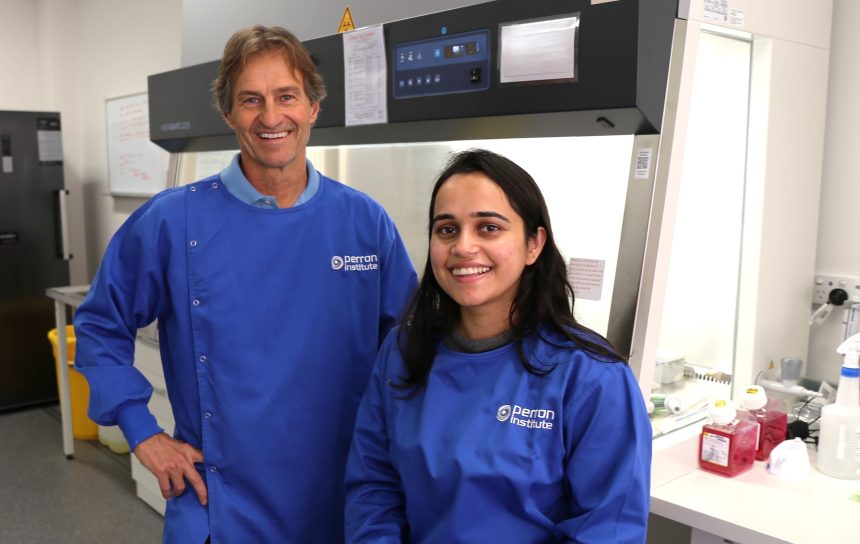
Genetic testing may help young Australians find a suitable antidepressant sooner
A recent WA pilot study has found that pharmacogenetic (PGx) testing shows promise as a tool to support antidepressant prescribing...
Continue reading

This website may not work correctly in Internet Explorer. We recommend switching to a more secure modern web browser such as Microsoft Edge which is already installed on your computer.
Research group
Dr Abigail Pfaff is a molecular geneticist investigating how structural variation and transposable elements within the non-coding genome influence the risk and progression of Parkinson’s disease and motor neurone disease (MND/ALS). She is a postdoctoral researcher within the Genetic Epidemiology Group at the Perron Institute and Murdoch University’s Personalised Medicine Centre.
Dr Pfaff completed a first-class degree in Anatomy and Human Biology and, in 2013, a PhD in molecular and cellular pharmacology at the University of Liverpool. Her doctoral research examined hominid retrotransposons as regulators of genomic function. She subsequently investigated genetic susceptibility to breast and ovarian cancer at Queen’s University Belfast before returning to neurodegenerative research at Liverpool and relocating to Western Australia in 2019.
Her research integrates short- and long-read whole-genome sequencing, RNA sequencing, bioinformatics and laboratory validation to characterise retrotransposon insertion polymorphisms and structural variants. Her work has identified altered patterns of L1 and SINE-VNTR-Alu elements in MND.
Dr Pfaff leads an MND Research Australia-funded investigation of L1 retrotransposons and contributes to research supported by the Michael J. Fox Foundation, the MND Association and the Darby Rimmer Foundation. These programs aim to identify genomic markers of disease susceptibility and progression and new therapeutic targets.
She has authored 45 peer-reviewed publications, including 13 as first author, and supervises Honours, Master’s and PhD researchers. Dr Pfaff is helping bring the overlooked complexity of the non-coding genome into precision neurodegenerative disease research.
Keep informed with our latest updates.
Stay up to date with our latest news and announcements.