Genetic testing may help young Australians find a suitable antidepressant sooner
A recent WA pilot study has found that pharmacogenetic (PGx) testing shows promise as a tool to support antidepressant prescribing...
Continue reading

This website may not work correctly in Internet Explorer. We recommend switching to a more secure modern web browser such as Microsoft Edge which is already installed on your computer.
Research group
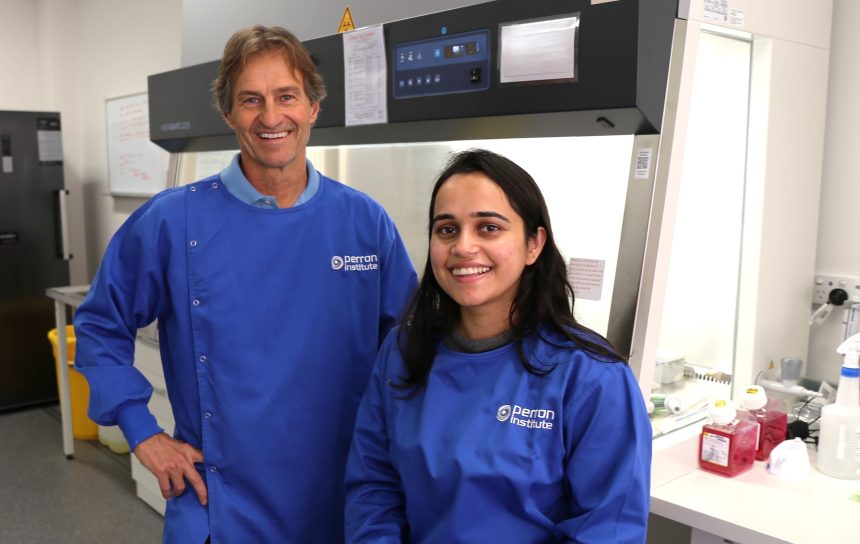
Dr Stuart Hodgetts is a regenerative neuroscience researcher specialising in spinal cord injury and repair. He leads the Spinal Cord Repair Laboratory at the Perron Institute and holds a joint appointment with The University of Western Australia.
Since 2003, his research has focused on strategies to protect, repair and regenerate the injured spinal cord. His program integrates clinical-grade adult human mesenchymal stem cells, induced pluripotent stem cells, cerebral organoids, gene therapy, cellular reprogramming, tissue engineering, neuroprotection and immunomodulation. He also investigates non-invasive and device-based approaches, including repetitive transcranial magnetic stimulation and red and near-infrared photobiomodulation.
Dr Hodgetts leads Western Australia’s only laboratory consistently using preclinical spinal cord injury models. The laboratory serves as a collaborative platform for neuroscientists, clinicians and engineers developing regenerative therapies, implantable devices and computational approaches to spinal cord injury and recovery.
His program has attracted nearly $7 million in research funding, including approximately $3.5 million as lead Chief Investigator. This includes a $1 million NHMRC Ideas Grant investigating implantable photobiomodulation devices for spinal cord repair.
Dr Hodgetts leads and mentors a team of postdoctoral and PhD researchers, supporting emerging scientists to develop expertise in regenerative neuroscience and translation. He works closely with the spinal cord injury community and contributes to creative collaborations connecting neuroscience, bioengineering and art. Through this work, he aims to move laboratory discoveries towards improvements in function, independence and quality of life for people living with spinal cord injury.
Keep informed with our latest updates.
Stay up to date with our latest news and announcements.